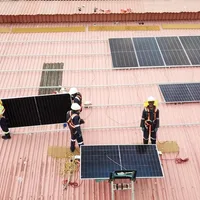
Nigeria has become Africa's second-largest importer of solar panels as chronic electricity shortages drive interest in renewable energy, but high upfront costs and limited purchasing power restrict adoption to a small portion of the population. Policy uncertainties, expensive capital, currency volatility, and limited local manufacturing capacity present barriers to scaling solar solutions, though some companies are shifting toward offering electricity as a service rather than selling systems outright.
 Topicle Beta






1 comment
Nigeria has become Africa's second-largest importer of solar panels as chronic electricity shortages drive interest in renewable energy, but high upfront costs and limited purchasing power restrict adoption to a small portion of the population. Policy uncertainties, expensive capital, currency volatility, and limited local manufacturing capacity present barriers to scaling solar solutions, though some companies are shifting toward offering electricity as a service rather than selling systems outright.